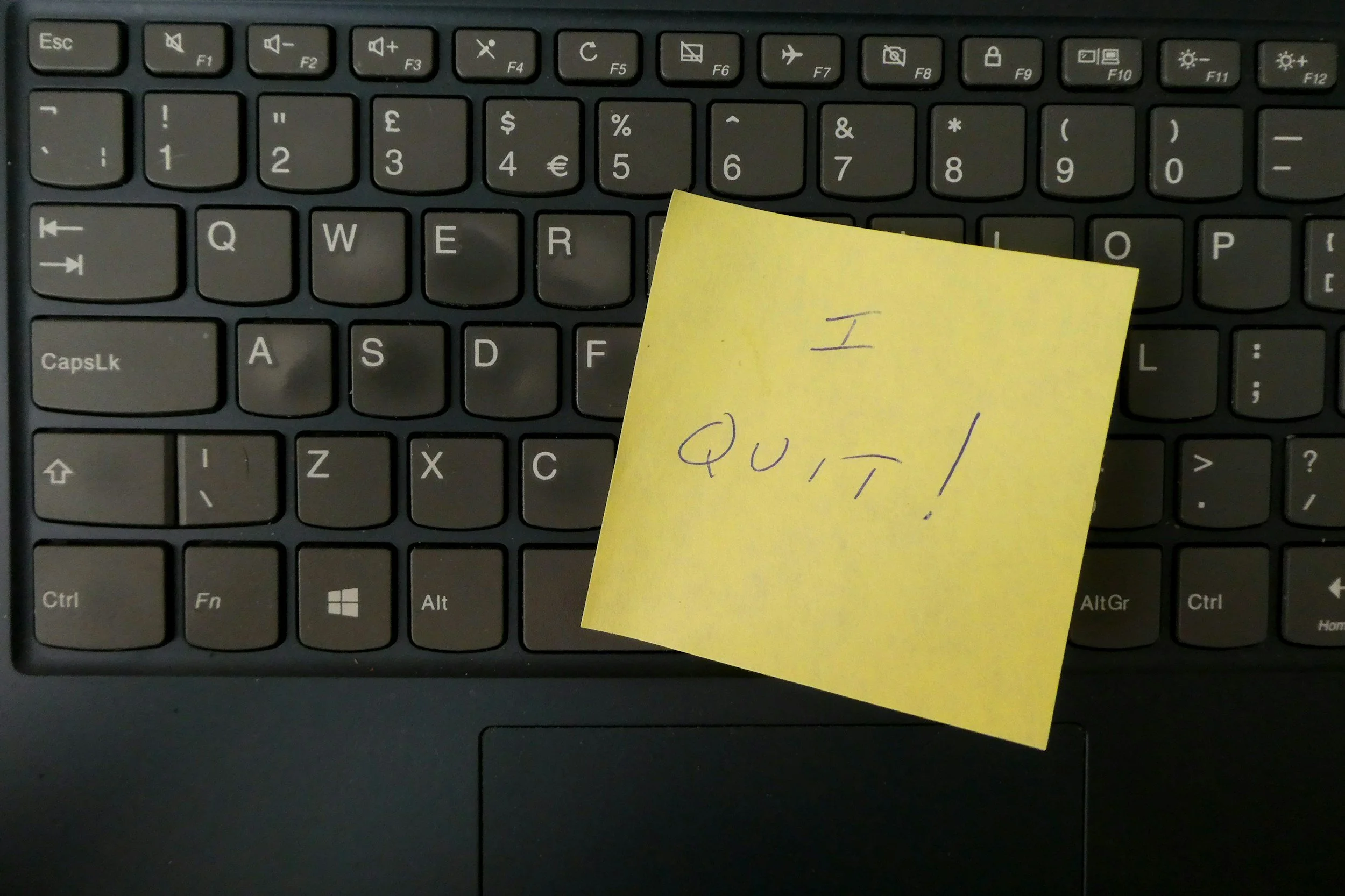
Someone asked me if I would ever write about what happened to me that made me quit my job, the “real one”, the one that paid the bills and wasn’t based in dreams and delusions— she might not have said the second part, but I’m sure that’s what she was thinking. I laughed and thought that would be both great and terrible at the same time to write it and let people read it, but instead of being cute and mysterious, I just said I was working on something else. I lied, sue me.
The truth is that, to me, writing started as a therapeutic tool long before I knew what therapy was, and my life and the people that surrounded me were a tremendous source of material. As time went by, the real world opened to something else, and that’s when the fiction started —many years ago— but I kept on writing about my days, and when I was old enough, I wrote about my job.
I’m happy I never had to sign an NDA, but in any case, no one should sweat about it. It isn’t so interesting to write about test results, project planning, or customer meetings. I never captured in my journals, personal emails, or post-its confidential numbers and dates, but I wrote about people, like I was doing research for future characters, villains, and heroes, real people sometimes troubled by extraordinary circumstances. Hundreds of individuals I met over the years are now in my mental database, and versions of them live on my pages. Isn’t it cool to be reinvented?
I started to write my first novel, Unwritten, during a six-month sabbatical. It was a personal experiment for which I read my early journals and compared what I had written with my current life. The 12-year-old me was very different from the 22-year-old version, and if we put another 20 years on top... well, you can imagine. I’m not the one whose life and shape changed, and I’m not talking about the wrinkles— not only, not today.
The more I wrote, the more I realized that my initial plan—spending six months doing something I liked—was becoming something else, but I didn’t want to admit it. I had to return to my job, and that’s what I did. I wanted to be promoted, and that’s what happened. I was certain I could do a good job, and still, I felt like someone was calling for me, pulling me away from all those things I was so sure about, and reminding me of all the others I didn’t want to talk about. It took me nine months on the job to realize that “normal” would not suffer anymore, no matter how able I was to do whatever I was told.
When I wrote Unwritten, I had a plan for three books, but the more I wrote, the clearer it became that it wouldn't work—the explanation for this would give material for a whole new post—, so I changed my plans. If the corporate career had taught me anything, it is that sometimes, we just need to pivot, and by now, I should be an honorary member of the Harlem Globetrotters. I pivoted, drifted, and hustled until things worked out.
My first novel is a coming-of-age story told from two different points of view, and I decided that the story of my career would serve as the foundation for something else. So, yes: I wrote about the moment I quit. There is no book to present yet, but there is a good foundation, and although it isn’t or will be a tell-it-all, I know some people will recognize themselves. I hope they see it as something good, even if they don’t like it.
I thought about including what I wrote about the human side of the resignation here—the reasons and how it made me feel—, but I realized I need to work on it a bit more. Being a writer is not only about letting it all out, but about editing it too, so, instead, I’ll share something else. If you ever experienced something like this, you might recognize the feeling. If not, well...
The last day
Today, I quit. I opened my laptop, failed my password three times, and when I finally could see the desktop, I didn’t know what to do; I didn’t remember where to find the information I needed. I battled the Company’s intranet for several minutes until I found the dry, sad webpage to enter the reason for leaving (personal circumstances) and the last day of the contract (end of the year). That was it. That’s how I finished a relationship of almost ten years. I’m out.
Less than five minutes away from that inevitable moment, I spoke with my human resources person. There she was, with her pretty smile, asking me how it was. ‘I quit,’ I told her, and I felt like a light breeze had gone through the door and kissed me in the face. ‘I will be out by the year’s end, ' I told her. And she smiled as well because she knew there was no other way.